The Original Residents of Ruskin Row: Winnipeg's Historic Crescentwood Street
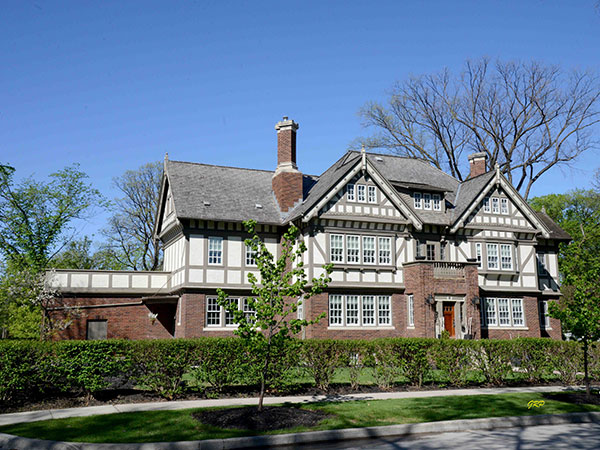
Ruskin Row, a quiet residential street in Winnipeg's prestigious Crescentwood neighborhood, has been home to some of the city's most notable citizens throughout its history. From lawyers and bankers to business leaders and public servants, the residents of Ruskin Row have left an indelible mark on Winnipeg's development. Today, when you stay at our Airbnb on this historic street, you're walking in the footsteps of these remarkable individuals.
Thanks to the meticulous records maintained by the Manitoba Historical Society, we can trace the history of who lived on Ruskin Row from the early 1900s through the late 20th century. Each address tells a story of ambition, success, and community contribution.
Ruskin Row was developed as part of Crescentwood's expansion in the early 20th century, attracting Winnipeg's elite who wanted to live in one of the city's most desirable neighborhoods. The street's name itself reflects the aspirations of its residents, Ruskin, likely named after the English art critic and social thinker John Ruskin, suggests a connection to culture, refinement, and thoughtful living.
On March 23, 2023, the Crescentwood-Enderton Park area, which encompasses Ruskin Row, was officially designated as Winnipeg's second Heritage Conservation District (HCD). This significant designation recognizes the neighborhood's unique architectural and historical importance, ensuring that future developments and alterations align with the community's heritage values and preserve the area's distinctive character. The HCD designation means that any work undertaken within the district boundary requires a heritage permit from the City of Winnipeg, protecting not just individual buildings, but the overall streetscape and sense of place that makes Crescentwood-Enderton Park special.
4 Ruskin Row: Lawyers and Legal Minds
The house at 4 Ruskin Row had two notable early residents:
Thomas Roberts Ferguson (1864-1923) lived at 4 Ruskin Row from 1906 to approximately 1916. Born in Cookstown, Ontario, Ferguson was educated at Upper Canada College in Toronto and was called to the Ontario Bar in 1888. He began practicing law in Barrie, Ontario, before moving to Winnipeg in 1902. By 1911, he was practicing with John Champion Collinson in the firm of Ferguson & Collinson, with offices in the Bank of Hamilton Chambers. Ferguson was made a King's Counsel and was a member of several prestigious organizations including the Manitoba Club, Canadian Club of Winnipeg, St. Charles Country Club, and the Commercial Travellers Association. He moved to Toronto in 1916 and died there in 1923.
John Ralston Davidson (1870-1948) succeeded Ferguson at 4 Ruskin Row, living there from approximately 1916 onward. Davidson was a prominent lawyer who contributed significantly to Winnipeg's legal community during the early 20th century. His presence on Ruskin Row continued the street's tradition of housing the city's legal elite.
From the 1920s to the 1940s, the original house on this site was home to Dr. John R. Davidson, a scientist who achieved recognition for his original research work in cancer. The house was used by the DICE Fraternity in the 1950s until it was demolished and replaced in 1957 by the present building.
6 Ruskin Row: The Stovel House
Chester David Stovel (1870-1937) lived at 6 Ruskin Row from 1910 until his death in 1937. Born in Mount Forest, Ontario, Stovel came to Winnipeg and, in partnership with his brothers Augustus Breathwaite Stovel and John Stovel, established a firm called "The Little Print Shop" in 1889, which eventually grew into the Stovel Printing Company.
Stovel eventually rose to become head of the company, in addition to being President of the Home Publishing Company, Canadian Finance Company, Western Business Papers Limited, Canadian Blacksmith Limited, Canadian Farm Implements Limited, and Nor-West Farmer Limited. He was also a director of the Standard Trusts Company, Waghorn's Guide Limited, and Canadian Magazine Publishers' Association.
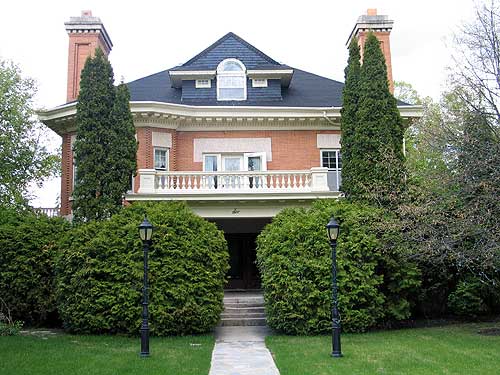
The two-storey brick and stone residence was designed by local architect Victor W. Horwood and built by contractor Christopher H. Simpson in 1910. The home featured 20 rooms with 2,500 square feet of space on the main floor for entertaining, Circassian Walnut panelling in the dining room, and original Scottish-made stained glass windows. Stovel was a member of the St. Charles Country Club, Pine Ridge Golf Club, Elmhurst Golf and Country Club, Motor Country Club, First Baptist Church, Odd Fellows, and Ancient Order of United Workmen.
Stovel married Isabel Hughena McIntyre in 1895, and they had five children. He died of a heart attack at Minneapolis, Minnesota on 19 December 1937 while visiting his daughter. His body was returned to Winnipeg for burial in Elmwood Cemetery. His wife Isabel continued to live at 6 Ruskin Row until 1940.
The Stovel House at 6 Ruskin Row is a two-storey brick and stone residence that exemplifies the quality craftsmanship and architectural design of early 20th-century Winnipeg. Designed by architect Victor W. Horwood and built by contractor Christopher H. Simpson, the house represents the work of two of Winnipeg's most respected professionals of the era. The home's interior features include Circassian Walnut panelling in the dining room, a luxury material that demonstrated the owner's wealth and taste. The original Scottish-made stained glass windows add artistic detail, while the 2,500 square feet of space on the main floor was designed specifically for entertaining, reflecting the social importance of the Stovel family in Winnipeg's business community.
10 Ruskin Row: The "Monster Mansion"
The most famous residence on Ruskin Row was undoubtedly 10 Ruskin Row, often called the "Monster Mansion." This extraordinary home had two notable residents:
Alexander Rae Davidson (1855-1922) was the original owner of 10 Ruskin Row, living there until his death in 1922. Davidson was a prominent banker who owned several banks in Minnesota and the Dakotas, making him one of the wealthiest men in the region. The mansion, designed by Minneapolis architect William Channing Whitney, was styled like an English manor house and featured 37 rooms, a ballroom measuring 60' x 25' in the basement, nine fireplaces, an elevator, and a garage with a turntable for automobiles, a remarkable feature for the era. The construction cost was approximately $150,000, a staggering sum equivalent to millions in today's dollars.
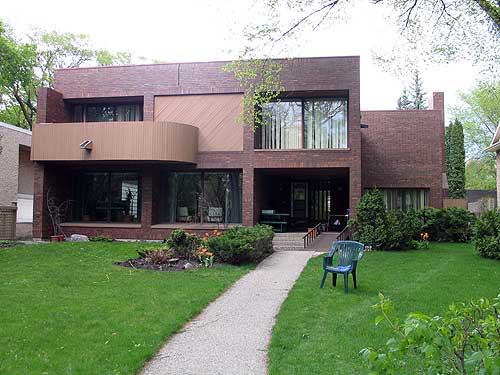
The mansion was so impressive that Russell, Lang & Co. included it in a book of Winnipeg postcards soon after it was built, cementing its status as one of the city's architectural marvels. Despite its grandeur and historical significance, the mansion was tragically demolished in 1963. The Art Gallery of Winnipeg even conducted a tour of the Davidson home before its demolition, recognizing its importance. The land was subsequently divided into three lots, and a smaller, modern home with the same address was built in 1974 by architect Peter Wreglesworth.
Robert Thomas Evans (1873-1936) later lived at 10 Ruskin Row in 1936, just before the mansion's eventual demolition. Evans was another prominent figure in Winnipeg's business community, continuing the tradition of the home being occupied by the city's elite.
12 Ruskin Row: From Legal Excellence to Modern Luxury
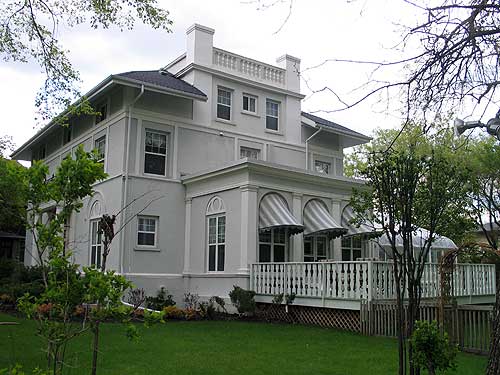
Alan Campbell Ewart (1875-?) lived at 12 Ruskin Row in 1911. Ewart was a lawyer who built the Italianate-style home in 1910-11. The house features a shallow pitched roof, symmetrical composition, and wrought iron trim, characteristic of the Italianate architectural style popular in Winnipeg during the early 20th century.
Later, the home was occupied by Ethelbert W. Kneeland, president of his own grain company and manager of the British Elevator Company. This transition from a lawyer to a grain company executive reflects the close connection between Winnipeg's legal and business communities, and demonstrates how Ruskin Row attracted leaders from various sectors of the city's economy.
A Masterpiece of Preservation and Modern Luxury
In more recent years, 12 Ruskin Row underwent an extraordinary three-year transformation that masterfully blended its original character with contemporary luxury, resulting in what has been described as a "true masterpiece" of design and preservation. Owned by Leon and Rob, the renovation project was a labor of love that required significant structural upgrades and careful attention to preserving the home's historic features. According to Design Shop Interior Design, the design focused on "artfully layering rich colours, patterns and textures to achieve an air of opulence without being imposing," celebrating abundance and self-expression while honoring the home's storied past.
The renovation, completed by Harris Builders, preserved many original features including the original hardwoods (which were matched when required), the fireplace in the living room with its original gold crown molding in the ceiling, pocket doors, and the William Morris tapestry walls in the dining room. As reported by the Winnipeg Free Press, the owners "kept what they could," ensuring that the home's historic character remained intact while creating spaces for modern living.
The 7,200-square-foot home (expanded from its original size) was designed to give the couple "an elevated space to cook, entertain and spend quality time together," as noted by Design Shop. The renovation created a seamless flow between historic elegance and modern functionality. Entering the home, visitors are greeted by a smashing foyer that leads to a music room complete with grand piano, a dedicated practice space for Rob, who is a musician. The room features gleaming hardwoods and an extravagant wet bar on the back wall, enhanced by the use of found marble slabs that add grandeur to the space. The formal dining room features a multi-beamed white ceiling and magnificent chandelier, while the living room showcases its ornate ceiling and classic fireplace.
One of the standout rooms is the library, which serves as a space to display mementos from the owners' travels, Broadway careers, and family heirlooms. The home also features a solarium that leads out to the backyard, and a restored conservatory with its own heating and cooling system, perfect for growing plants or enjoying a meal.
Perhaps the most impressive addition to the home is the kitchen and family room area, skillfully added to the rear of the home and adding approximately 2,000 square feet to the home's square footage. The kitchen seamlessly blends transitional cabinetry with traditional furniture, including an armoire-inspired pantry, successfully merging the old and the new. The island kitchen is a chef's dream, complete with a butler's pantry, high-end appliances, skylight, and gorgeous finishes including a custom plaster hood fan, gold backsplash tiling, and spectacular quartz countertops. A wonderful banquette eating area provides a cozy spot for casual meals, while a glimpse of green from the butler's pantry catches the eye, creating a harmonious flow.
The family room is truly stunning with its high ceiling and all the natural light that comes in from the windows that surround it. A double-sided custom Venetian pearl plaster fireplace looks incredible, and there's also a beautiful loft above that looks down on the space. The living and dining areas open directly onto the patio, providing easy access to the fireplace, garden, pool, and hot tub, ensuring a seamless indoor-outdoor connection.
The second floor features a laundry room, two large secondary bedrooms, a luxe four-piece bath, and the primary bedroom suite. The primary bedroom is particularly impressive, featuring a gorgeous fireplace, hardwood floors, and two large windows that let in abundant natural light. The six-piece ensuite is a spa-like retreat with a heated tile floor, two-side entry steam shower with heated benches, a gorgeous vanity with dual sinks, and a free-standing air jet soaker tub set in an alcove with Venetian pearl plaster walls. The home also includes a shared walk-in closet, and the design emphasizes spaces and amenities for two, reflecting the dual nature of the owners' personalities and their life together as a couple.
The previously unused mezzanine space at the top of the stairs has been transformed into a tranquil and functional yoga studio, strategically situated across from the large backlit mirror above the fireplace, the perfect setting for an early morning yoga flow. Great care was taken in recreating the original railing in this area, ensuring that it meets safety standards while preserving the overall aesthetic. An elegantly curved staircase leads to the home's third floor, which features three more bedrooms, a four-piece bath, and an absolutely fabulous family room. This top-tier space offers not only a spacious living area with media room, but an island with quartz countertops, two beverage fridges, microwave, dishwasher, and large custom pantry, making it a perfect space for children or guests.
The backyard is a private resort-like retreat, beautifully landscaped and featuring a pool, hot tub, multiple sitting areas, and a firepit. A double garage includes an 802-square-foot guest house above, and there's even a gym downstairs for those who like to work out. The property sits directly across from storied Peanut Park, adding to its appeal.
When the home was listed for sale in 2023 at $4,999,999, it represented one of the most expensive homes on the market in Winnipeg. The property was last sold in 2017 for $1,375,000, and the extensive renovations (which reportedly cost nearly double what it would have cost to demolish and rebuild) demonstrated an extraordinary commitment to preserving the historic structure. As the Winnipeg Free Press noted, "Classic elegance and modern living come together here perfectly in a great location. It's everything you could want in a high-end home, and more." The renovation of 12 Ruskin Row stands as a testament to what's possible when historic preservation meets thoughtful, luxurious design, creating a home that honors its past while providing every modern amenity for contemporary living.
14 Ruskin Row: Athletic Excellence
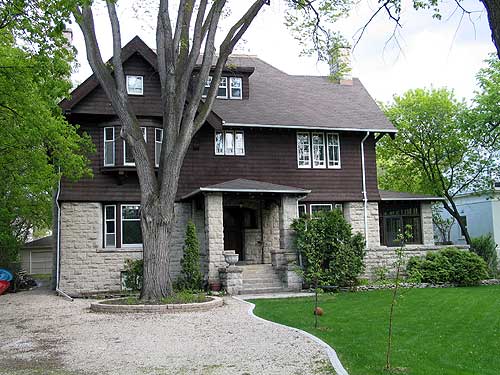
John Crichton Green-Armytage (1872-1943) lived at 14 Ruskin Row in 1925. Green-Armytage was manager of Confederation Life Assurance Company and was a well-known oarsman, having been in the first Winnipeg crew to compete at the Henley Regatta in 1897 after having won the championship of America. His presence on Ruskin Row reflects the street's appeal to those who had achieved distinction in both business and athletics.
18 Ruskin Row: Family Legacy
Elmer Lee Alsip (1877-1941) lived at 18 Ruskin Row in 1941. The Alsip family name appears elsewhere in Winnipeg's history, including William Alsip who lived on River Avenue, suggesting a family with deep roots in the city's development.
25 Ruskin Row: Business Leadership and Modern Appeal
Nixon John Breen (1872-1954) lived at 25 Ruskin Row in 1928. Breen was Western Manager of Lake of the Woods Milling Company, a significant position in Winnipeg's grain and milling industry. The house was designed by architect A. E. Cubbidge, who also designed homes for the Eaton, Leach, Carruthers and Gilchrist families on Wellington Crescent in the 1920s.
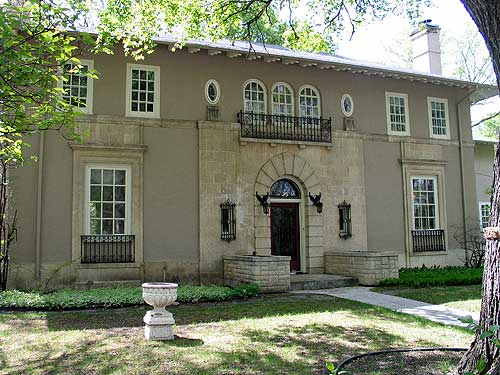
The house features symmetry, a square block shape, a low-pitched hip roof, wide eaves, and round-headed windows, all Italianate details. The high quality, smooth, square-cut Tyndall stone of the facade and the carved Tyndall stone window surrounds make this an elegant house. The dining room walls are hand-painted in a pattern copied from a Florentine fabric. The house originally had a tile roof when it was built in 1928.
In March 2024, 25 Ruskin Row was listed for sale. The listing highlighted the property's prime location on a large treed lot overlooking Peanut Park, featuring its distinctive Tyndall stone facade, five bedrooms, 4.5 bathrooms, grand staircase, 10-foot ceilings, oak floors, updated eat-in kitchen, and rooftop patio. This property exemplifies the continued appeal of Ruskin Row's historic homes to buyers seeking both architectural character and modern amenities.
29 Ruskin Row: The Scott House
Perhaps the most architecturally significant home still standing on Ruskin Row is 29 Ruskin Row, known as the Scott House. This stately residence has had several notable occupants:
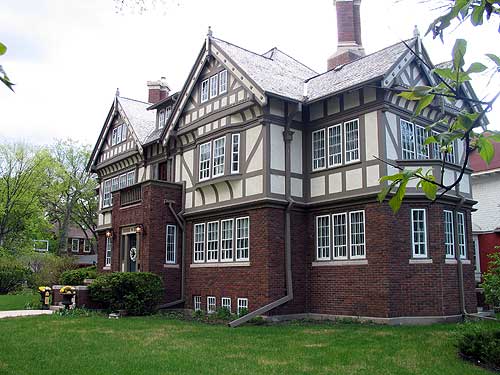
Robert Ross Scott (1857-1924) was the first owner of this magnificent house, living there from 1914 until his death in 1924. Scott earned his fortune in the fruit business and was also President of the Sovereign Life Assurance Company. The 2½-storey structure was designed by local architect John Nelson Semmens and constructed in 1914 by the J. McDiarmid Company for $20,000, a substantial sum for the era. The house received a Preservation Award from Heritage Winnipeg in 1995 and is a municipally-designated historic site, ensuring its preservation for future generations.
After Scott's death, his widow Kate Matheson Scott (1861-1935) continued to live at the house from 1924 to 1930. The home then passed to George Russell Ryan (1883-1955), another prominent figure in Winnipeg's business and social circles. Ryan's ownership continued the tradition of the house being home to Winnipeg's business elite.
James Elliott Coyne (1910-2012) lived at 29 Ruskin Row from 1966 to 1991. Coyne was one of Canada's most significant public servants, serving as Governor of the Bank of Canada from 1955 to 1961. His tenure was marked by the "Coyne Affair," a major political controversy when he publicly disagreed with the government's economic policies. Coyne's presence on Ruskin Row represents the street's continued appeal to those who shaped Canada's national institutions.
Did You Know? James Elliott Coyne's time as Governor of the Bank of Canada was so significant that his resignation led to changes in how the Bank of Canada Act was interpreted, clarifying the relationship between the Bank and the federal government. His home at 29 Ruskin Row was where he lived during his retirement years, making it a site of national historical importance.
The Scott House at 29 Ruskin Row stands as one of Crescentwood's best-preserved historic homes. Designed by architect John Nelson Semmens, the 2½-storey structure showcases the architectural sophistication of Winnipeg's elite residential construction in the 1910s. The house's designation as a municipally-designated historic site and its receipt of a Preservation Award from Heritage Winnipeg in 1995 demonstrate its ongoing significance to the community. The home's continued preservation, even as other historic homes on the street have been demolished or significantly altered, speaks to the value that both the community and property owners place on maintaining Winnipeg's architectural heritage.
As a municipally-designated historic site, 29 Ruskin Row continues to be one of the street's most significant properties. According to the City of Winnipeg's Assessment and Taxation Department, this 2½-storey residence, built in 1914, has a living area of 5,135 square feet and an assessed value of $1,250,000 as of the 2026 assessment roll. The home's protected status ensures its preservation for future generations.
The Legacy of Ruskin Row
What makes Ruskin Row special is not just the impressive homes that line its streets, but the remarkable people who called it home. From lawyers who shaped Winnipeg's legal system to bankers who financed the city's growth, from business leaders who built companies to public servants who served the nation, Ruskin Row has been home to individuals who made significant contributions to Winnipeg and Canada.
The street's architecture reflects the aspirations of its residents, homes designed for entertaining, built with quality materials, and situated in one of Winnipeg's most desirable neighborhoods. The fact that many of these homes still stand today, including the municipally-designated Scott House at 29 Ruskin Row, speaks to the enduring value placed on this historic street.
Crescentwood-Enderton Park Heritage Conservation District
On March 23, 2023, the Crescentwood-Enderton Park area, which encompasses Ruskin Row, was officially designated as Winnipeg's second Heritage Conservation District (HCD). This significant designation recognizes the neighborhood's unique architectural and historical importance, ensuring that future developments and alterations align with the community's heritage values and preserve the area's distinctive character.
The HCD designation means that any work undertaken within the district boundary (including alterations, additions, or new construction) requires a heritage permit from the City of Winnipeg. This process ensures that changes respect the historic character of the neighborhood while allowing for sensitive updates and maintenance. The designation protects not just individual buildings, but the overall streetscape and sense of place that makes Crescentwood-Enderton Park special.
Heritage Protection: The Crescentwood-Enderton Park HCD Plan has created an Advisory Committee to help guide decisions about the district. This community involvement ensures that the neighborhood's heritage values are preserved while allowing for thoughtful evolution. For property owners within the HCD, heritage permits are required before undertaking work, helping to maintain the area's historic integrity. Stay Winnipeg operates an Airbnb on Ruskin Row and has a representative on the Advisory Committee, bringing a property owner's perspective to the preservation and development decisions that shape the district's future.
Ruskin Row, as part of this Heritage Conservation District, benefits from this protection. The street's collection of early 20th-century homes, from the Stovel House at 6 Ruskin Row to the Scott House at 29 Ruskin Row, represents a significant period in Winnipeg's development. The HCD designation ensures that these homes and the street's overall character will be preserved for future generations, maintaining the connection to the remarkable people who once lived here.
This designation reflects a growing recognition of the importance of preserving Winnipeg's architectural heritage. As the city's second Heritage Conservation District (after Armstrong's Point), Crescentwood-Enderton Park demonstrates the community's commitment to honoring its past while planning for its future. For visitors staying on Ruskin Row, this means experiencing a neighborhood that is actively protected and valued for its historical significance.
Explore More: To learn more about the history of Ruskin Row and its residents, visit the Manitoba Historical Society's records. You can also read about the Scott House at 29 Ruskin Row and the Stovel House at 6 Ruskin Row, both of which are documented historic sites.
Real Estate Trends: The increasing value of properties on Ruskin Row reflects broader trends in Winnipeg's luxury real estate market. According to the Winnipeg Regional Real Estate Board, 25 homes have sold above $2 million in Winnipeg over the past 30-plus years, with 19 of those sales occurring in the last five years. The Heritage Conservation District designation, combined with the street's historic significance and prime location, continues to make Ruskin Row one of Winnipeg's most desirable addresses.
Experiencing Ruskin Row Today
When you stay at our Airbnb on Ruskin Row, you're not just booking accommodation; you're experiencing a piece of Winnipeg's history. The tree-lined street, the well-maintained historic homes, and the sense of continuity with the past make Ruskin Row a special place to visit.
Take a walk down the street and imagine the early 20th century when lawyers like Thomas Roberts Ferguson and Alan Campbell Ewart walked these same sidewalks. Picture the grandeur of the "Monster Mansion" at 10 Ruskin Row, or the elegant Scott House at 29 Ruskin Row where James Elliott Coyne, one of Canada's most important central bankers, spent his retirement years.
Ruskin Row represents the best of Winnipeg's history, a street where ambition, success, and community service came together to create one of the city's most prestigious addresses. Today, that legacy continues through the Heritage Conservation District designation, which ensures that the street's historic character is preserved for future generations. As a member of the Crescentwood-Enderton Park Heritage Conservation District Advisory Committee, I'm actively involved in helping preserve and protect this remarkable neighborhood. We're honored to share this historic street with our guests.
As part of the Crescentwood-Enderton Park Heritage Conservation District, Ruskin Row is now protected by municipal heritage policies that recognize its significance to Winnipeg's architectural and social history. This protection means that when you walk down the street, you're experiencing a neighborhood that has been officially recognized for its importance and is actively preserved.
Whether you're interested in architecture, history, or simply want to experience one of Winnipeg's most beautiful neighborhoods, staying on Ruskin Row offers a unique opportunity to connect with the city's past while enjoying all the comforts of modern accommodation. The Heritage Conservation District designation ensures that this experience will be available for generations to come.